The one-pot that fills a northern Chinese table is this one – pork, cabbage, and noodle tofu stew, and this home cook’s version is the family pot where everything braises together. A home cook wrote it in five steps with the layering in the title: pork and cabbage core first, leaves and noodles last. I made it as written, and it is the warming, saucy pot that feeds everyone.
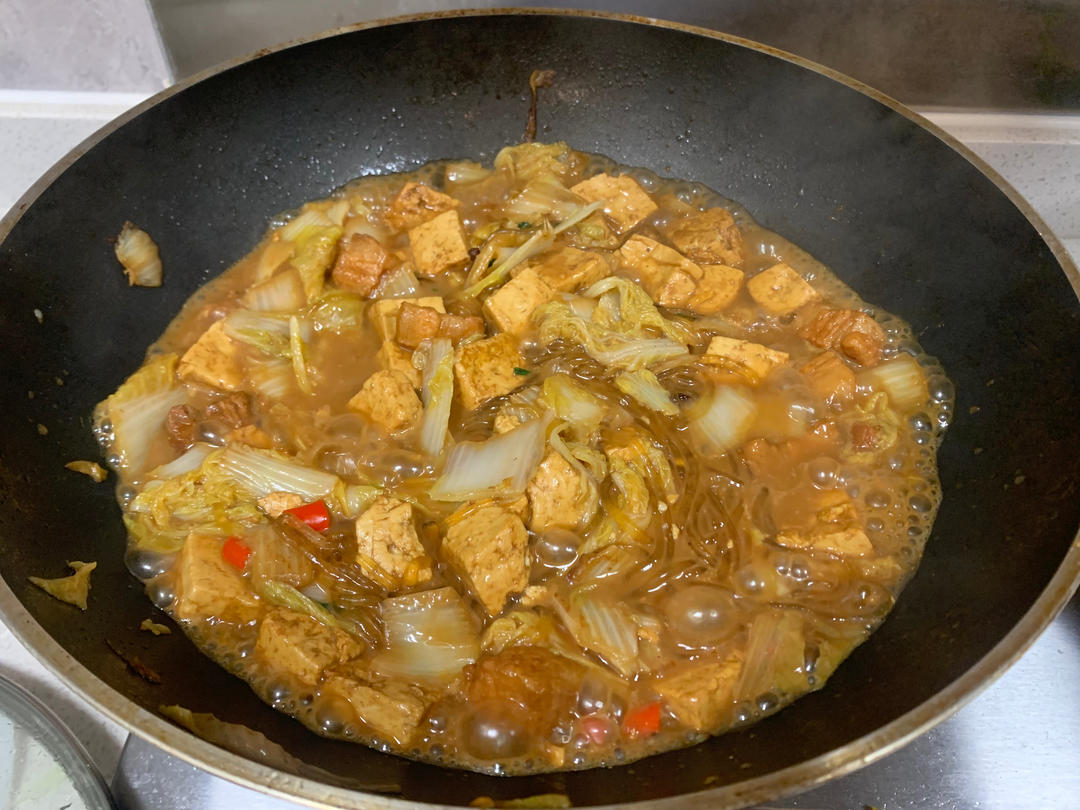
Wu hua rou bai cai fen tiao dun dou fu (五花肉白菜粉条炖豆腐) is pork, cabbage, and sweet-potato noodle tofu stew – rendered pork belly braised with cabbage cores, then leaves, noodles, and tofu in one pot.
What Is Pork, Cabbage and Noodle Tofu Stew?
This is the northern Chinese one-pot: pork belly renders its fat with ginger, scallion, garlic, star anise, and peppercorns; the thick cabbage cores go in first with soy, dark soy, and oyster sauce, then hot water simmers fifteen minutes. The tender cabbage leaves, sweet-potato noodles, and tofu join for ten minutes more until everything is saucy and soft. It is the pot that turns cheap ingredients into a table of comfort.
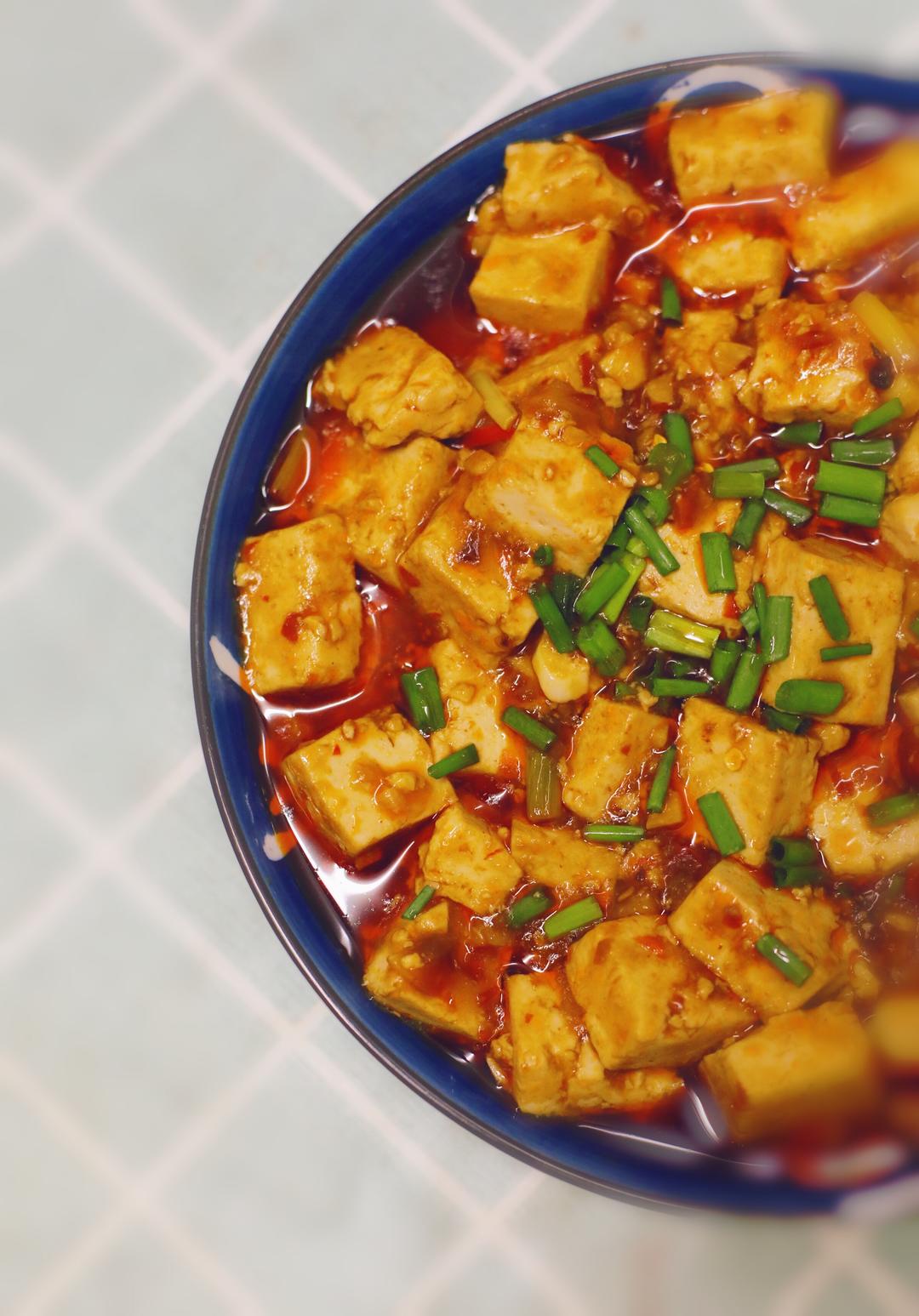
For the soy-braised tofu sibling of the same hearty pot, my red braised tofu is the tofu-alone version.
1Red Braised Tofu (Hong Shao Dou Fu)This authentic Sichuan-style Red Braised Tofu is a savory, slightly spicy vegetarian dish that is perfect for weeknight dinners. Tofu cubes are simmered in a rich Doubanjiang sauce infused with Sichuan peppercorns.Check out this recipe
Why This Recipe Works
- The rendered pork fat. The flavor base of the whole pot.
- Cores first, leaves last. Each part of the cabbage cooks right.
- The fifteen-minute base simmer. The broth builds before the noodles join.
- Sweet-potato noodles and tofu last. They take the broth without overcooking.
- One pot, a whole table. The northern classic.
Equipment Needed
- A large pot or Dutch oven
- A lid
- A spatula
Ingredients
- 150 g (5.3 oz) pork belly, sliced
- 1 small head of napa cabbage, cores and leaves separated
- A handful of sweet-potato noodles (fen tiao)
- 300 g (10.5 oz) tofu, cut into cubes
- A little ginger, scallion, garlic, star anise, and peppercorns
- 2 tbsp light soy, 1 tbsp dark soy, 1 tbsp oyster sauce
- Salt, to taste
- A little oil
Ingredient Notes
Pork belly: Rendered first – the fat is the base. My pan-fried tofu with minced pork uses pork the same way. Cabbage: Cores and leaves in two stages. Sweet-potato noodles: The chewy northern staple. Tofu: Cubed and simmered last so it stays tender. My types of tofu explained sorts the blocks.
Prep & Mise en Place
Slice the pork; separate the cabbage cores and leaves; cut the tofu; measure the sauces.
Cooking Process
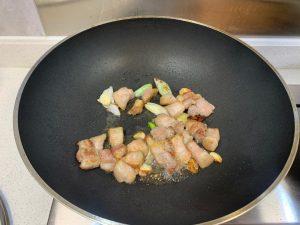
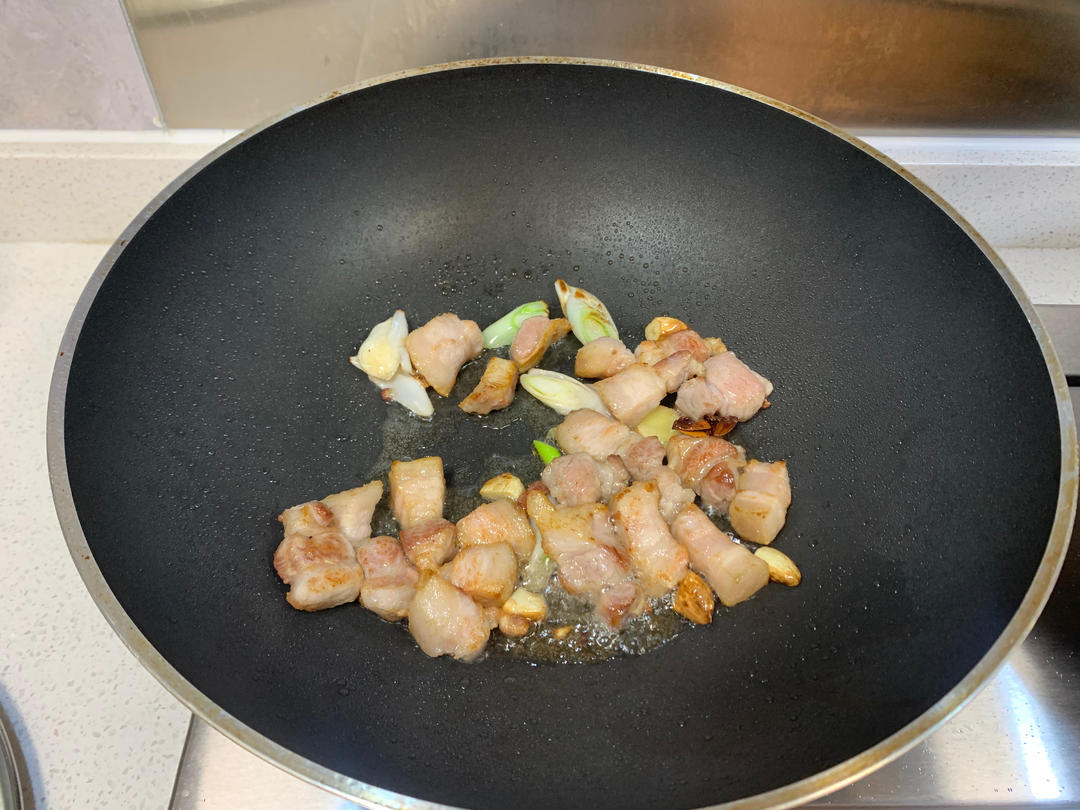
Step 1 – Add a little oil, then the pork belly, and render the f
Add a little oil, then the pork belly, and render the fat with ginger, scallion, garlic, star anise, and peppercorns.
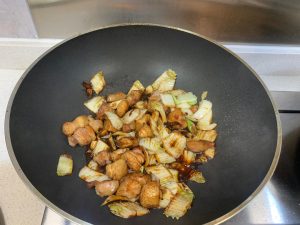
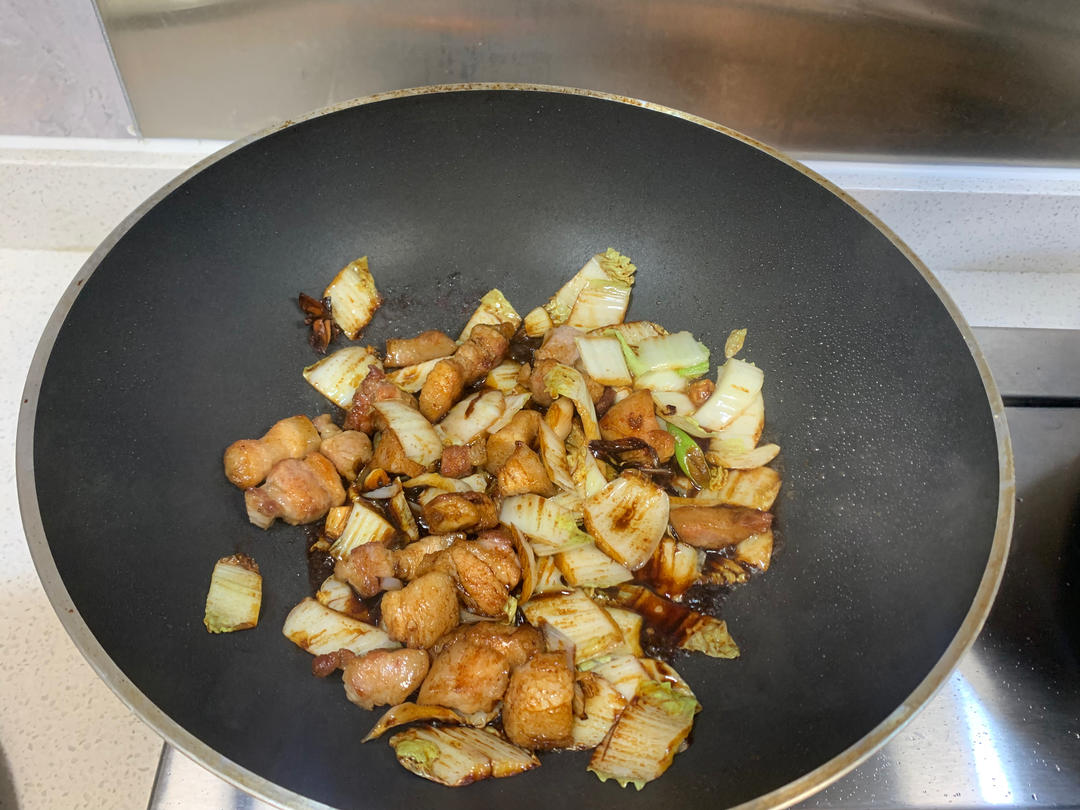
Step 2 – Add the cabbage cores and stir-fry with light soy, dark
Add the cabbage cores and stir-fry with light soy, dark soy, and oyster sauce.
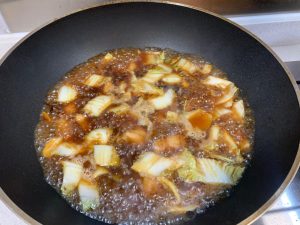
Step 3 – Add hot water and simmer 15 minutes
Add hot water and simmer 15 minutes.
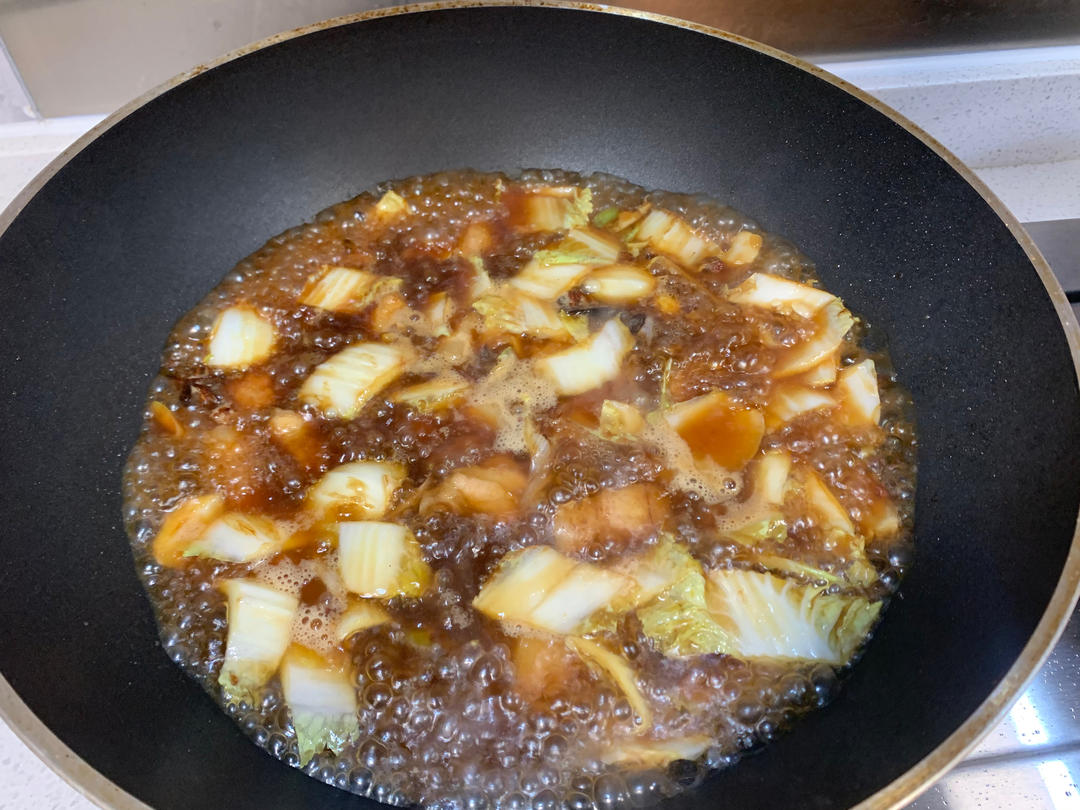
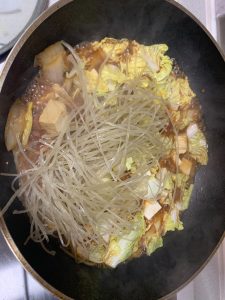
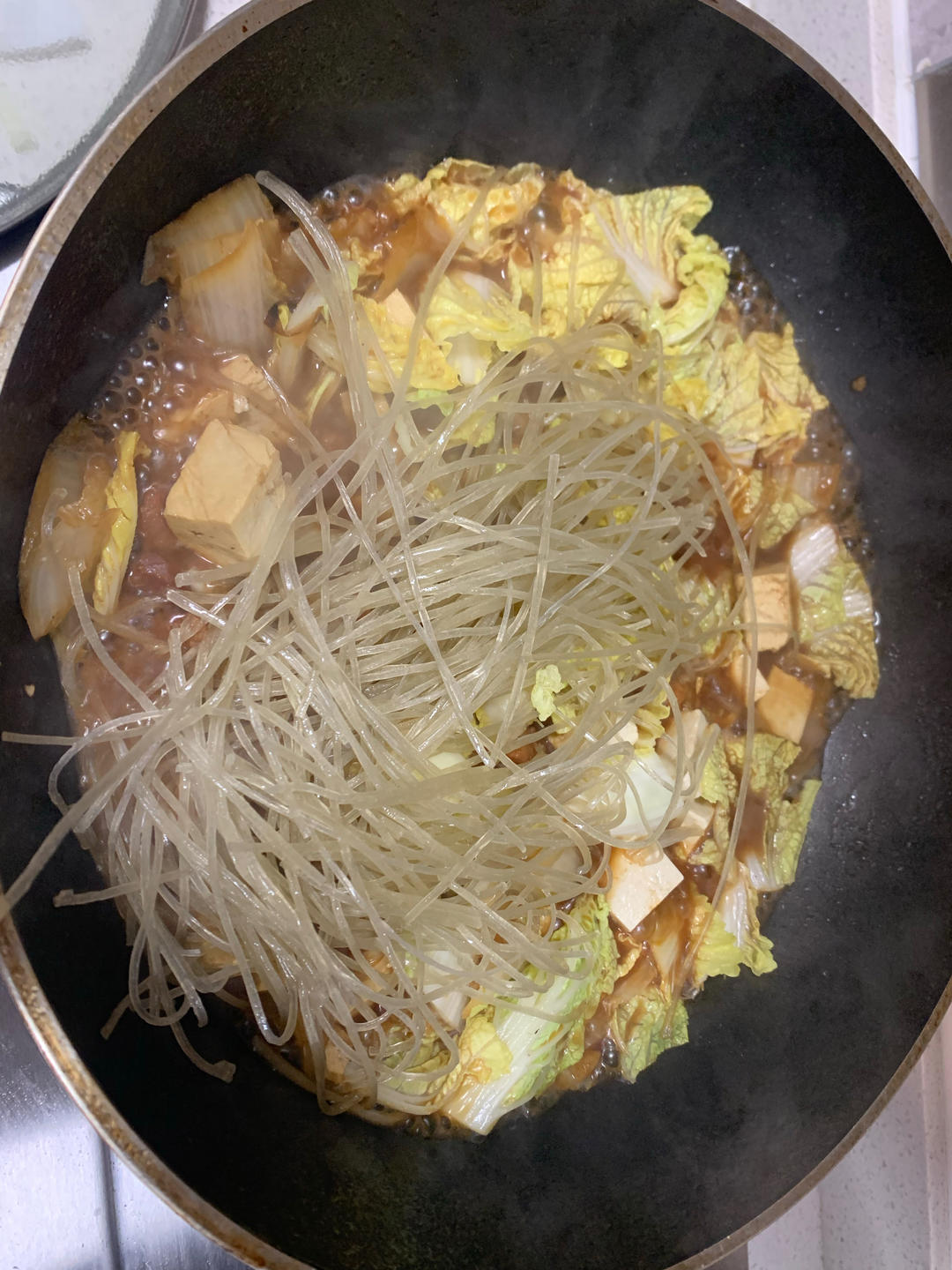
Step 4 – Add the cabbage leaves, sweet-potato noodles, and tofu;
Add the cabbage leaves, sweet-potato noodles, and tofu; simmer 10 minutes.
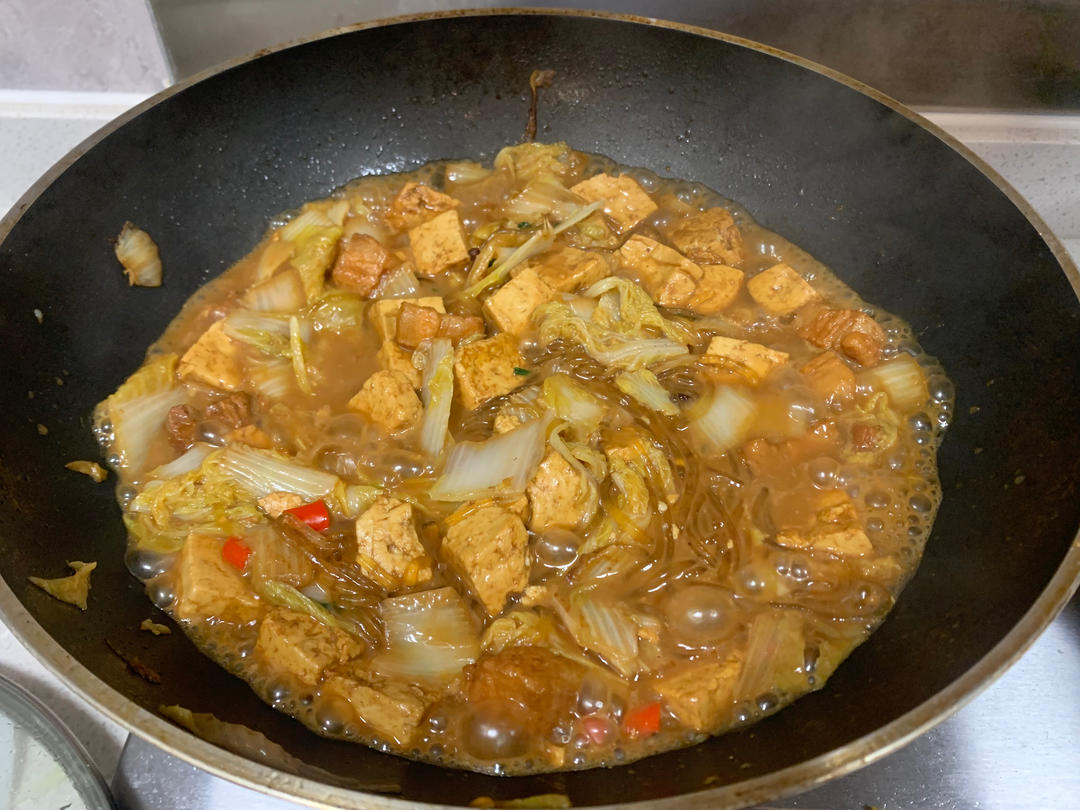
Step 5 – Season with salt to taste and serve
Season with salt to taste and serve.
Common Mistakes When Making This Dish
1. A greasy pot. Cause: not rendering the pork. Fix: let the fat cook out first. 2. Raw, hard cabbage cores. Cause: adding them with the leaves. Fix: cores first, fifteen minutes. 3. Mushy noodles. Cause: adding them too early. Fix: ten minutes at the end. 4. A watery broth. Cause: too much water. Fix: just enough to braise. 5. A bland pot. Cause: timid sauce. Fix: the soy-oyster balance.
Variations
More tofu: Extra cubes for a heartier pot. My red braised tofu is the tofu-only braise. Chili: Dried chilies with the aromatics for heat.
Frequently Asked Questions
Why cores first? They need the extra minutes; the leaves cook fast. What are sweet-potato noodles? Chewy fen tiao – the northern staple. Can I skip the pork? Yes, with more oil and mushrooms – my silken tofu potage is the light soup beside it, and sweet and sour tofu the brighter plate. How long does it take? About 45 minutes. Is it spicy? Not by default.
How to Serve
Serve the whole pot with rice – with red braised tofu, pan-fried tofu with minced pork, and home-style tofu for a hearty table, or with braised tofu with bok choy and savory tofu and egg stir-fry for variety.
Storage & Reheat
Refrigerate 3 days; reheat gently. Never leave out more than 2 hours.
Allergen Notice
This recipe contains soy (soy sauce, tofu), shellfish (oyster sauce), and pork. It is free of gluten (verify the sauces), dairy, egg, nuts, and fish.
Nutrition Disclaimer
Nutrition information is calculated using an ingredient database and should be considered an estimate. In cases where multiple ingredient alternatives are given, the first listed is calculated for nutrition. Garnishes and optional ingredients are not included.
About the Author & Recipe Development
I am Jason Guo, a Chinese chef who has cooked professionally for more than five years – including time as a head chef – and now runs my own small restaurant in China, where tofu appears on the menu almost every day. This xiachufang cook’s pork, cabbage, and noodle tofu stew is the northern pot that feeds my whole table, and the recipe’s two-stage cabbage is exactly why nothing overcooks. I tested it as written. I have not tested the chili version, so that is your experiment, not my claim.
Authoritative References
USDA Food Safety and Inspection Service – Safe Temperature Chart for safe storage of cooked dishes.
Pork, Cabbage & Noodle Tofu Stew (五花肉白菜粉条炖豆腐)
Ingredients
Equipment
Method
- Add a little oil, then the pork belly, and render the fat with ginger, scallion, garlic, star anise, and peppercorns.

- Add the cabbage cores and stir-fry with light soy, dark soy, and oyster sauce.
- Add hot water and simmer 15 minutes.
- Add the cabbage leaves, sweet-potato noodles, and tofu; simmer 10 minutes.

- Season with salt to taste and serve.