The shrimp-and-tofu plate I make when I want the sea without the fuss is this one – three-fresh braised tofu, and this home cook’s version blanches the tofu in salted water so it never breaks. A home cook wrote it in twenty steps with the trick in the title: salted water until it boils, then the tofu holds and takes flavor. I made it as written, and it is the fresh, tender plate that looks like a restaurant did it.
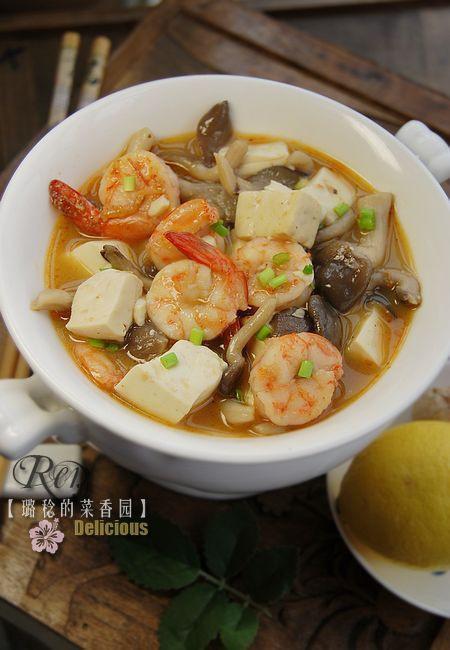
San xian shao dou fu (三鲜豆腐) is three-fresh braised tofu – shrimp and crab mushrooms braised with tofu that was first blanched in salted water, in a glossy abalone-sauce broth.
What Is Three-Fresh Braised Tofu?
This is the three-fresh plate of shrimp, mushroom, and tofu: raw shrimp are deveined and flash-fried just until they turn color, then set aside. The tofu is cut small and blanched in salted water up to the boil – the salt seasons it and the boil firms it so it survives the braise – then cooled. Crab mushrooms are seared in the shrimp’s oil, a little water or stock goes in with a spoon of abalone sauce, and the tofu simmers five minutes over high heat before the shrimp returns with a splash of light soy and a few drops of sesame oil.
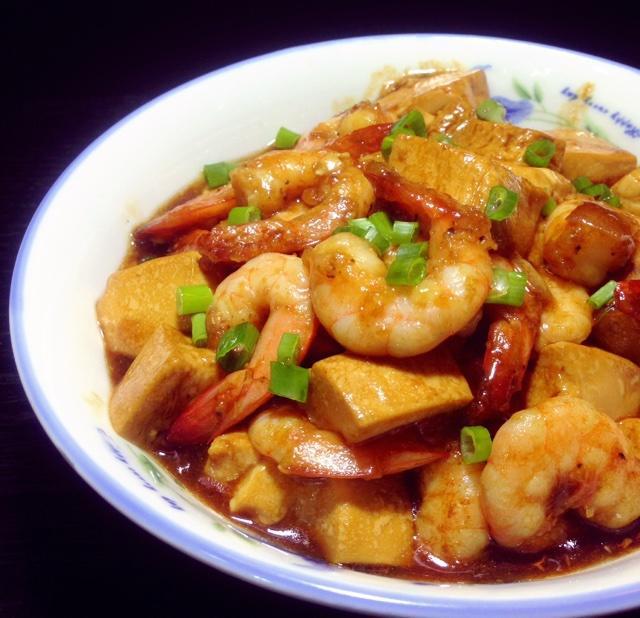
For the silky shrimp-and-tofu bowl of the same seafood pair, my silky shrimp and tofu braises without the mushrooms.
1Silky Shrimp and Tofu (Xia Ren Dou Fu)A classic Chinese homestyle dish combining tender shrimp and silky tofu in a savory oyster sauce gravy. High in protein, low in fat, and ready in 20 minutes.Check out this recipe
Why This Recipe Works
- The salt-water blanch. The tofu holds and takes flavor – the recipe’s trick.
- Shrimp fried first, added last. Sweet, never rubbery.
- The shrimp’s own oil. The mushroom sears in it.
- Five minutes over high. The braise gets in.
- A glossy finish. Abalone sauce, soy, sesame.
Equipment Needed
- A wok or skillet
- A pot for the tofu
- A spatula
Ingredients
- 250 g (8.8 oz) raw shrimp, shelled and deveined
- 1 block of tofu, in small cubes
- A handful of crab mushrooms (or mixed mushrooms)
- 2 tbsp abalone sauce (or oyster sauce)
- 1 tsp salt, plus light soy and sesame oil
- A little scallion and oil
Ingredient Notes
Shrimp: Fried first, added last – sweet, never rubbery. My silky shrimp and tofu is the sister bowl. Tofu: Blanched in salted water so it holds. The sauce: Abalone sauce is sweet and savory – skip it if you dislike the sweetness.
Prep & Mise en Place
Devein the shrimp; cut the tofu; blanch the tofu in salted water; tear the mushrooms.
Cooking Process
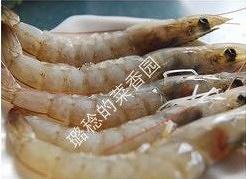
Step 1 – Buy about half a pound of fresh raw shrimp
Buy about half a pound of fresh raw shrimp.
Step 2 – Shell and devein, pulling the vein from the head end –
Shell and devein, pulling the vein from the head end – or poke through at the second segment and lift it out.
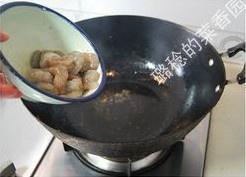
Step 3 – Heat oil in the wok and add the shrimp
Heat oil in the wok and add the shrimp.
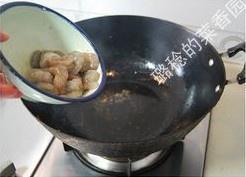
Step 4 – Stir-fry over high heat just until they change color
Stir-fry over high heat just until they change color.
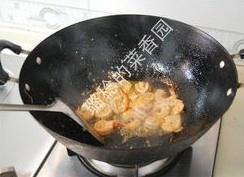
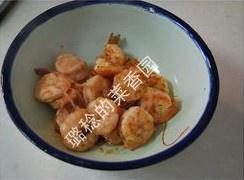
Step 5 – Lift them out
Lift them out.
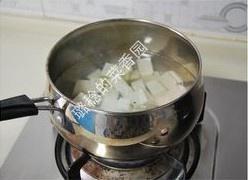
Step 6 – Cut the tofu into small cubes and put them in water wit
Cut the tofu into small cubes and put them in water with salt; bring to a boil – boiled this way, the tofu holds together and takes flavor.
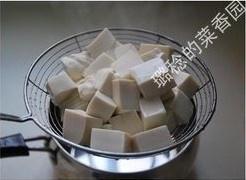
Step 7 – Lift the tofu out and cool it briefly in cold water
Lift the tofu out and cool it briefly in cold water.
Step 8 – Break the crab mushrooms into small clusters, wash, dra
Break the crab mushrooms into small clusters, wash, drain, and add them to the shrimp’s oil.
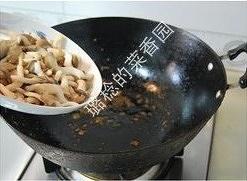
Step 9 – Sear them quickly
Sear them quickly.
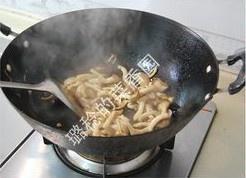
Step 10 – Add about half a bowl of water, or a light stock
Add about half a bowl of water, or a light stock.
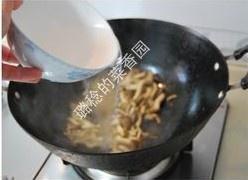
Step 11 – Season with two spoons of abalone sauce – it is sweet a
Season with two spoons of abalone sauce – it is sweet and fresh; skip it if you don’t like sweet.
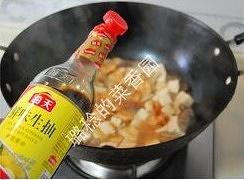
Step 12 – Add a spoon of salt to taste, or none
Add a spoon of salt to taste, or none.

Step 13 – Boil briefly over high heat
Boil briefly over high heat.
Step 14 – Add the blanched tofu and keep it on high heat 5 minute
Add the blanched tofu and keep it on high heat 5 minutes.
Step 15 – Add the shrimp back
Add the shrimp back.
Step 16 – Push gently with the spatula – do not break the tofu
Push gently with the spatula – do not break the tofu.
Step 17 – A little light soy
A little light soy.
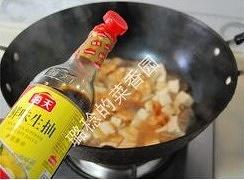
Step 18 – Drip in a few drops of sesame oil
Drip in a few drops of sesame oil.
Step 19 – Out of the pan and onto the plate
Out of the pan and onto the plate.
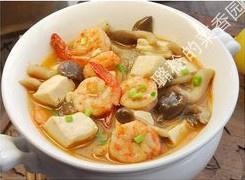
Step 20 – Scatter a little scallion
Scatter a little scallion.
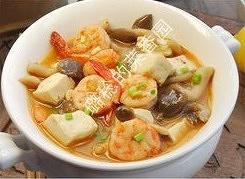
Common Mistakes When Making This Dish
1. Broken, flavorless tofu. Cause: no salt-water blanch. Fix: boil it in salted water first. 2. Rubbery shrimp. Cause: cooked twice too long. Fix: the flash fry and the last-minute return. 3. A watery sauce. Cause: no high-heat reduce. Fix: the five boiling minutes. 4. A heavy sweet note. Cause: too much abalone sauce. Fix: taste before adding. 5. Crushed tofu. Cause: hard stirring. Fix: push gently.
Variations
No abalone sauce: Use oyster sauce. My braised tofu with bok choy is the green-only braise. More mushroom: Shiitake with the crab mushrooms.
Frequently Asked Questions
Why blanch the tofu in salted water? It seasons and firms it – the recipe’s trick for unbroken tofu. What are the three fresh? Shrimp, crab mushrooms, and tofu. When do the shrimp go back? Last, so they stay tender. Can I skip the abalone sauce? Yes – it is sweet; use oyster sauce. How long does it take? Under 30 minutes, and my silken tofu potage is the soup to follow, savory tofu and egg stir-fry the fast second plate.
How to Serve
Serve with rice – with silky shrimp and tofu, home-style tofu, and red braised tofu for a tofu table, or with golden pan-fried tofu and braised tofu with bok choy for variety.
Storage & Reheat
Refrigerate 2 days; reheat gently. Never leave out more than 2 hours. For a tomato seafood version of the same pot, try my silky shrimp and tofu.
Allergen Notice
This recipe contains shellfish (shrimp, oyster or abalone sauce) and soy (soy sauce, tofu). It is free of gluten (verify the sauces), dairy, egg, nuts, and fish.
Nutrition Disclaimer
Nutrition information is calculated using an ingredient database and should be considered an estimate. In cases where multiple ingredient alternatives are given, the first listed is calculated for nutrition. Garnishes and optional ingredients are not included.
About the Author & Recipe Development
I am Jason Guo, a Chinese chef who has cooked professionally for more than five years – including time as a head chef – and now runs my own small restaurant in China, where tofu appears on the menu almost every day. This xiachufang cook’s three-fresh braised tofu is the seafood plate of my weeknights, and the recipe’s salt-water trick is exactly why the tofu never breaks. I tested it as written. I have not tested it without the abalone sauce, so that is your experiment, not my claim.
Authoritative References
USDA Food Safety and Inspection Service – Safe Temperature Chart for safe storage of cooked dishes.
Three-Fresh Braised Tofu (三鲜豆腐): The Salt-Water Trick
Ingredients
Equipment
Method
- Buy about half a pound of fresh raw shrimp.

- Shell and devein, pulling the vein from the head end - or poke through at the second segment and lift it out.

- Heat oil in the wok and add the shrimp.
- Stir-fry over high heat just until they change color.

- Lift them out.

- Cut the tofu into small cubes and put them in water with salt; bring to a boil - boiled this way, the tofu holds together and takes flavor.

- Lift the tofu out and cool it briefly in cold water.

- Break the crab mushrooms into small clusters, wash, drain, and add them to the shrimp's oil.

- Sear them quickly.

- Add about half a bowl of water, or a light stock.
- Season with two spoons of abalone sauce - it is sweet and fresh; skip it if you don't like sweet.
- Add a spoon of salt to taste, or none.

- Boil briefly over high heat.
- Add the blanched tofu and keep it on high heat 5 minutes.
- Add the shrimp back.
- Push gently with the spatula - do not break the tofu.
- A little light soy.
- Drip in a few drops of sesame oil.
- Out of the pan and onto the plate.

- Scatter a little scallion.