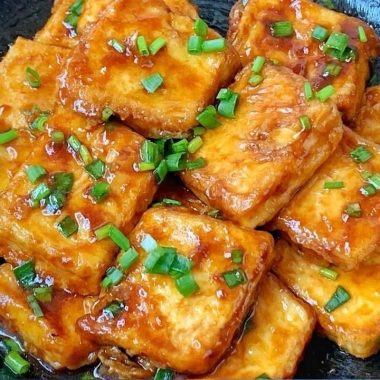
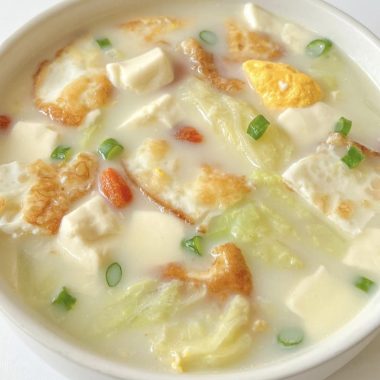
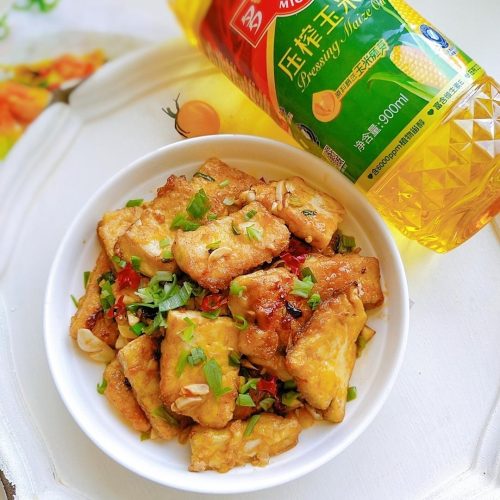
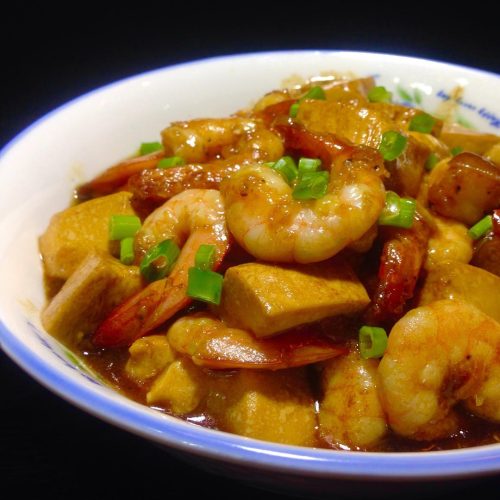
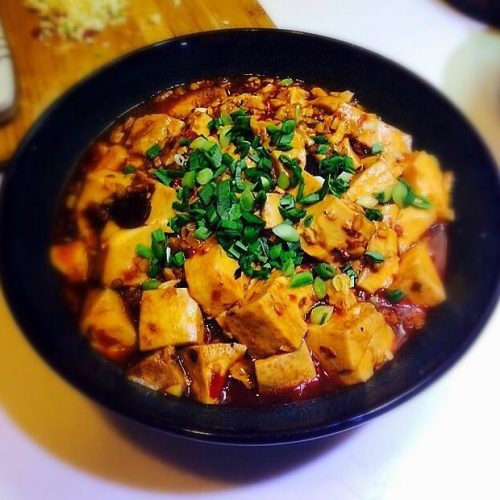
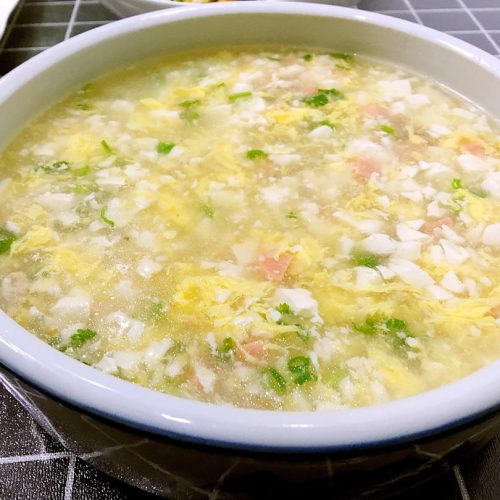
When people think of spicy Sichuan tofu, they almost always mean Mapo Tofu. But in homes across China, this simpler, quicker version—Mala Doufu, or “Spicy Numbing Tofu”—is just as common.
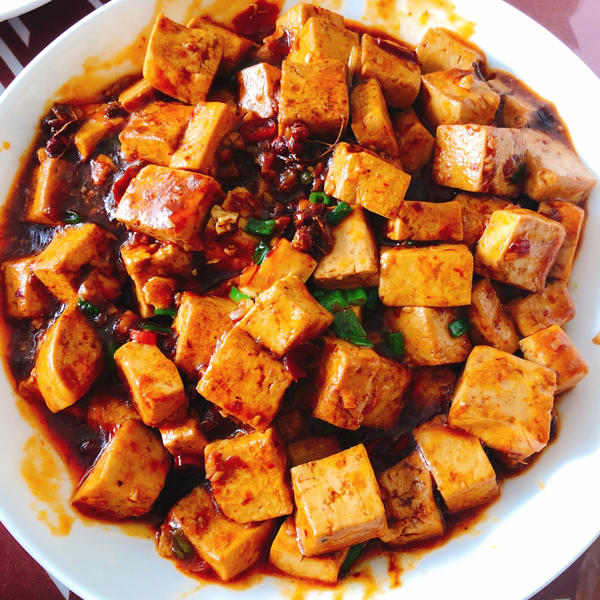
Hi, I’m Jason Guo, a chef and food writer here at The Tofu Kitchen. This is the kind of dish my parents would whip up on a Tuesday night. It wasn’t a big project; it was just dinner. The second I smelled the sizzling garlic, chiles, and Doubanjiang, I knew it was time to eat. It’s pure, uncomplicated comfort food.
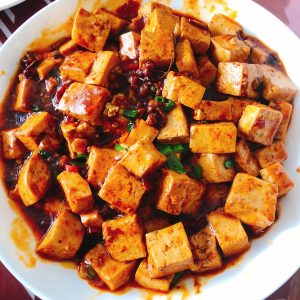
The flavor is “Málà” (麻辣), that classic Sichuan combination of numbing (from Sichuan peppercorns) and spicy (from chiles and bean paste). Unlike its more famous cousin, this recipe uses firm tofu (老豆腐), which is much easier for beginners to handle. It doesn’t break apart in the pan, and it does a fantastic job soaking up that glossy, savory, and incredibly fragrant sauce.
This is the perfect recipe to master those foundational Sichuan flavors in about 20 minutes.
Why You’ll Love This Recipe
- Incredibly Flavorful: It hits all the right notes—savory, spicy, and that signature numbing tingle (málà!) all at once.
- Great Texture: Uses firm tofu that holds its shape, creating a wonderful, soft-but-chewy contrast to the rich, glossy sauce.
- Beginner-Friendly & Fast: This is a one-pan, 20-minute recipe that’s perfect for a weeknight. The steps are simple and the firm tofu is very forgiving.
- Authentic Homestyle: This is a classic example of Chinese home-style cooking (家常菜, jiāchángcài)—fast, satisfying, and packed with flavor.
What Is Mala Tofu?
Mala Doufu (麻辣豆腐) literally translates to “Numbing Spicy Tofu.” It’s a classic Sichuan-style home-cooked dish. While it shares its core DNA with Mapo Tofu, it’s more of a broad category of spicy tofu dishes.
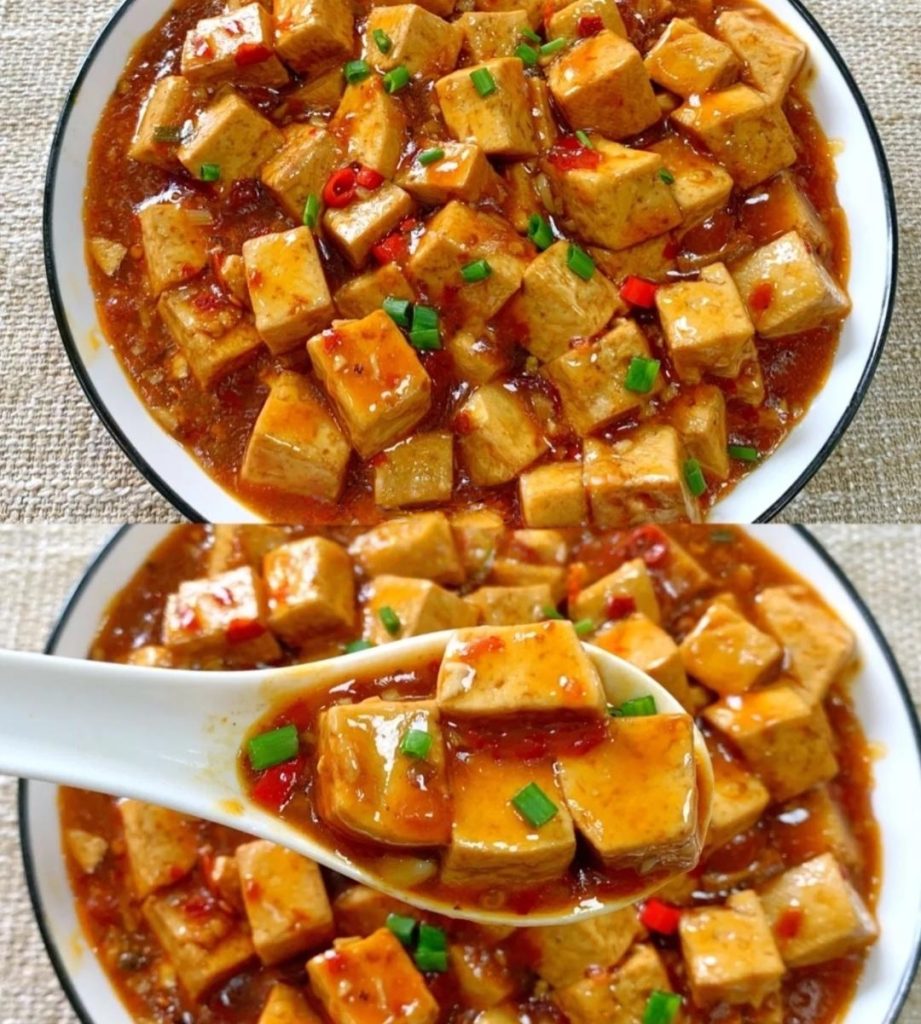
Its signature flavor profile comes from two key ingredients:
- Doubanjiang (豆瓣酱): The spicy, salty, fermented broad bean paste that forms the savory base.
- Huajiao (花椒): The Sichuan peppercorns that provide the “málà” (numbing) sensation.
The resulting sauce is deeply savory, spicy (la), and creates that famous tingly, numbing buzz on your tongue (ma). It’s loved in Chinese homes for its bold, straightforward flavor and how incredibly satisfying it is over a simple bowl of steamed rice.
Why This Recipe Works
This recipe is simple, but it relies on a few professional techniques to get that perfect restaurant-quality result:
- Blanching is Key: We blanch the tofu cubes in boiling water for 2-3 minutes. This is a crucial step I learned in restaurant kitchens. It removes the “raw” soy taste (豆腥味), firms up the tofu so it won’t crumble, and (counter-intuitively) helps the hot tofu absorb the sauce better than cold tofu.
- Blooming the “Red Oil”: We fry the Doubanjiang in oil before adding any liquid. We call this “frying out the red oil” (炒出红油, chǎo chū hóng yóu). This step is essential to unlock the paste’s deep color and savory, fermented flavor.
- Balanced Homestyle Sauce: The sauce hits all the right notes: light soy for savory umami, dark soy for a deep glossy color, oyster sauce for body and a hint of sweetness, and a pinch of sugar to round out all that spice.
- Forgiving for Beginners: By using firm tofu (老豆腐), this recipe is incredibly forgiving. It doesn’t fall apart, even if you stir it a little too much, making it perfect for anyone new to Chinese cooking.
Ingredients for Spicy Numbing Tofu
The ingredient list for this dish is all about building those layers of Sichuan flavor. The two most important ingredients you can’t skip are Doubanjiang and Sichuan Peppercorns.
The Tofu
- Firm Tofu (老豆腐, lǎo dòufu): You’ll need 2 blocks of firm or medium-firm tofu. Do not use silken tofu (it will disintegrate) or extra-firm tofu (it’s often too dense and won’t absorb the sauce as well). Just drain it well; no pressing is needed since we are blanching it.
Key Aromatics & Spices
- Doubanjiang (豆瓣酱): This is the heart and soul of the dish. It’s a spicy, salty, fermented broad bean paste. For the most authentic flavor, I strongly recommend the Pixian (郫县) brand, which you can find at any Asian supermarket or online (like on Amazon or The Mala Market). There is no good substitute; this is what makes the dish taste like real Sichuan food.
- Sichuan Peppercorns (花椒, huājiāo): These provide the ‘málà’ (numbing) flavor. They aren’t “hot” like chiles; they create a unique, tingly, citrusy sensation on your lips and tongue. You can buy them whole and toast/grind them yourself, or use pre-ground powder.
- Dried Red Chiles (辣椒, làjiāo): These are for aroma and spicy heat (la). Standard Chinese dried chiles (like Tianjin or Facing Heaven) are perfect. You can leave them whole for milder heat or snip them in half (and shake out the seeds) for more spice.
- Garlic & Scallions (葱蒜): The essential foundation. We’ll use the white/light green parts of the scallion for cooking and save the dark green tops for garnish.
The Sauce
- Light Soy Sauce (生抽, shēngchōu): This is for saltiness and umami flavor. Standard Kikkoman or Lee Kum Kee are perfect.
- Dark Soy Sauce (老抽, lǎochōu): This is almost entirely for color. It adds a beautiful, deep reddish-brown gloss to the sauce with a hint of molasses.
- Oyster Sauce (蚝油, háoyóu): This adds a savory-sweet richness and helps give the sauce body. For a vegan version, use a mushroom-based “vegan oyster sauce.”
- Sugar & Salt: A pinch of sugar is crucial for balancing the spice and saltiness. We only add salt at the very end, as the Doubanjiang and soy sauces are already very salty.
- Cornstarch (淀粉, diànfěn): Mixed with cold water to make a slurry (水淀粉, shuǐ diànfěn). This is the classic Chinese technique called ‘gouqian’ (勾芡) to thicken the sauce into a beautiful, glossy gravy that clings to every piece of tofu.
What You Will Need (Tools & Equipment)
You don’t need a lot of special equipment for this dish.
- Wok or Skillet: A 12-to-14-inch carbon steel wok is ideal for getting that ‘wok hei’ (breath of the wok). However, this recipe works perfectly in a large nonstick skillet or a 12-inch cast-iron pan.
- Small Pot: You’ll need a separate small saucepan to blanch the tofu.
- Slotted Spoon or Spider: This is the easiest way to gently lift the tofu out of the blanching water.
- Small Bowls: Have 2-3 small bowls ready for your ‘mise en place’—one for the mixed sauce, one for the slurry, and one for your chopped aromatics.
Recipe Notes Before We Begin
- Difficulty: Beginner-friendly
- Total Time: About 20 minutes (10 min prep, 10 min cook)
- Flavor Profile: Savory, spicy (la), and numbing (ma).
Before you turn on the stove, remember these three crucial tips:
- Don’t Skip the Blanching! It takes 2 minutes and is the #1 secret to tofu that is tender, flavorful, and doesn’t fall apart.
- Mise en Place is Everything: This recipe is fast. Have all your ingredients chopped, your sauce mixed, and your slurry ready before you start cooking.
- Fry the Doubanjiang First: Cook that bean paste in the oil for a full 30-60 seconds before adding any water. You must “fry the red oil” (炒出红油) to get the right color and flavor.
Mise en Place & How to Prep
This is the most important step for any stir-fry.
- Prep Tofu: Gently remove the 2 blocks of firm tofu from their packages. Drain the liquid. Cut the tofu into 1-inch (2.5 cm) cubes.
- Prep Aromatics:
- Mince 3-4 cloves of garlic.
- Slice 3 scallions, separating the white/light green parts from the dark green parts.
- Snip 4-6 dried red chiles in half (shake out seeds for less heat) or leave them whole.
- Measure 1-2 teaspoons of whole Sichuan peppercorns.
- Mix the Sauce: In a small bowl, whisk together: 2 tablespoons (30 ml) light soy sauce, 1 tablespoon (15 ml) oyster sauce, 1 teaspoon (5 ml) dark soy sauce, and 1/2 teaspoon (2 g) sugar.
- Prep Slurry: In a separate small bowl, mix 1 tablespoon (10 g) cornstarch with 2 tablespoons (30 ml) cold water.
How to Make Spicy Numbing Tofu
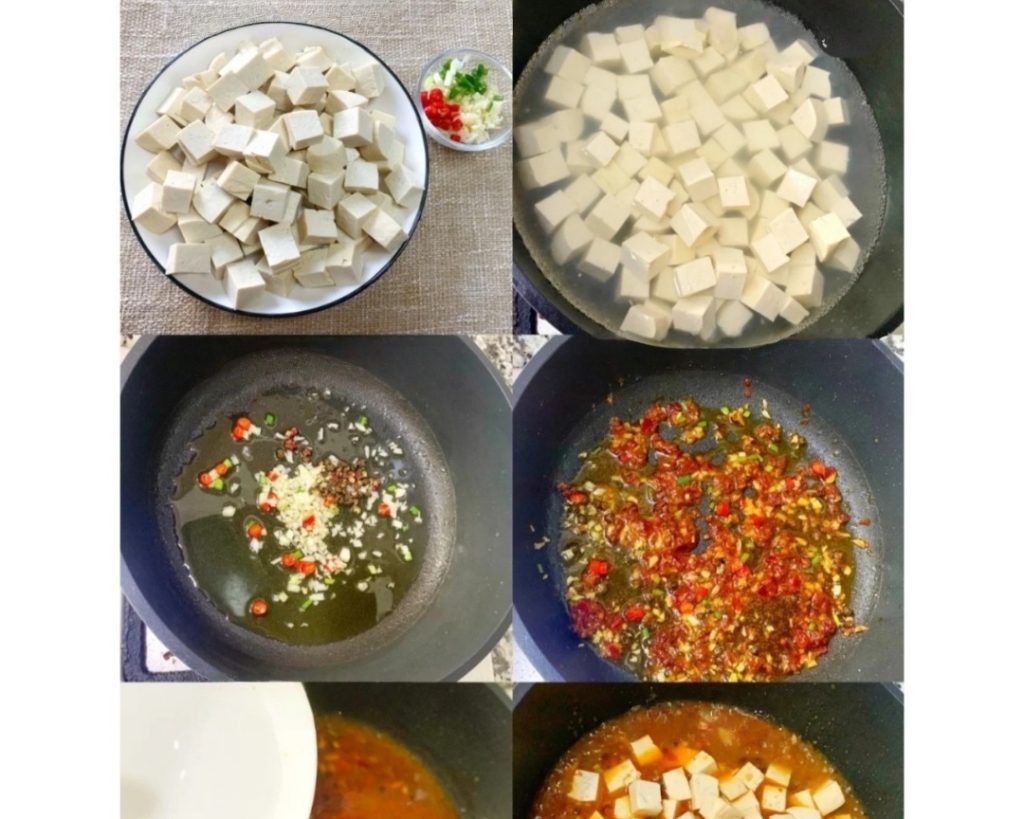
With all your prep done, the cooking will take less than 10 minutes.
- Blanch Tofu: Bring a small pot of water to a rolling boil. Carefully add the tofu cubes and let them simmer for 2-3 minutes. You’ll see the water get a little cloudy. This step removes the raw soy taste and firms them up. Gently remove the tofu with a slotted spoon and set it aside.
- Infuse the Oil: Heat your wok or large skillet over medium-high heat. Add 2 tablespoons (30 ml) of cooking oil. When the oil is hot, add the Sichuan peppercorns and dried red chiles. Stir-fry for 30-45 seconds until they are very fragrant and the chiles just begin to darken. Be careful not to burn them!
- Fry Aromatics & Paste: Add the minced garlic and the scallion whites. Stir-fry for just 15 seconds until you can smell the garlic. Add the 1 tablespoon of Doubanjiang (spicy bean paste). Use your spatula to fry the paste into the oil for 30-60 seconds, breaking it up. The oil will turn a beautiful, deep red color.
- Create the Sauce: Pour in about 1/2 cup (120 ml) of water (or unsalted chicken/vegetable broth). Stir to combine, scraping up any delicious bits from the bottom of the pan.
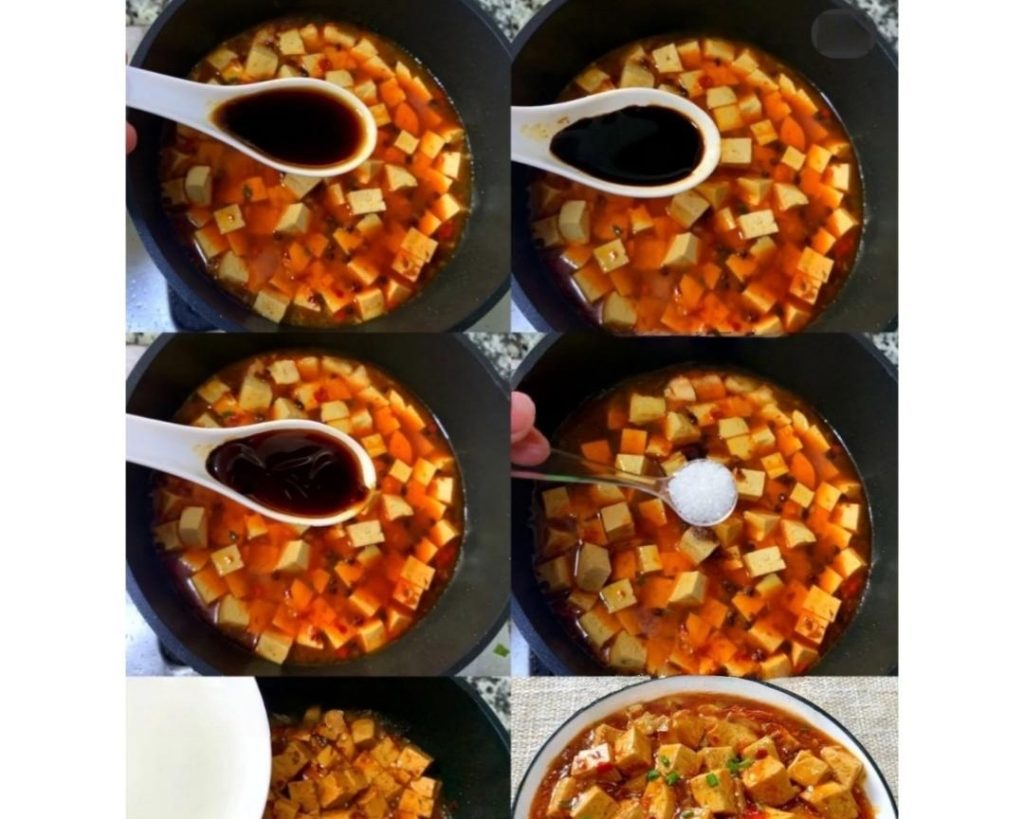
- Simmer Tofu: Add the pre-mixed sauce (the bowl with soy sauces, oyster sauce, and sugar) and bring everything to a boil. Gently slide the blanched tofu cubes into the pan. Turn the heat down to a steady simmer and let the tofu cook for 5 minutes. This allows it to absorb all the flavors.
- Chef’s Tip: Don’t stir aggressively. Instead, use your spatula to gently “push” the sauce from the edges over the tofu, or gently jiggle the pan to keep things moving.
- Thicken (Gouqian): Give your cornstarch slurry a quick re-stir (the starch always settles). While the sauce is simmering, pour the slurry in slowly, stirring gently. The sauce will thicken and turn beautifully glossy almost immediately, in about 15-30 seconds.
- Finish: Turn off the heat. Taste the sauce; add a tiny pinch of salt only if needed (it’s usually salty enough from the paste and soy sauce). Stir in most of the chopped scallion greens.
- Serve: Transfer to a serving bowl and garnish with the remaining scallion greens. This dish is best served immediately with plenty of hot, steamed rice.
Deeper Dive: Key Ingredients & Techniques
The Soul of the Dish: Doubanjiang (豆瓣酱)
You simply can’t make this dish without it. True Sichuan Doubanjiang is made from fermented broad beans, chiles, salt, and wheat flour. The best kind, from Pixian county, is fermented for months or even years, giving it an incredibly deep, savory, umami flavor that isn’t just spicy.
When you “fry the red oil” (炒出红油), you’re blooming the fat-soluble compounds in the paste, releasing its signature color and aroma into the dish. This step is non-negotiable!.
The Technique: Blanching Tofu (焯水)
Why bother boiling the tofu before you cook it?. This is a standard practice in Chinese kitchens, especially for tofu.
- Removes “Raw” Flavor: It gets rid of that “beany” or “raw soy” taste (豆腥味) that unseasoned tofu can have.
- Improves Texture: The hot water seasons the tofu slightly and tightens its protein structure, making firm tofu even firmer and much less likely to break during the stir-fry.
- Better Sauce Absorption: The hot tofu cubes absorb the sauce more readily than cold tofu straight from the fridge.
Tips to Succeed
- Control the Numbness: If you love the numbing flavor but don’t like biting into the peppercorn husks, here’s a pro-tip: fry the whole peppercorns in step 2, then use your slotted spoon to quickly scoop them out and discard them before adding the garlic. The oil is now perfectly infused. Alternatively, just use 1/2 teaspoon of ground Sichuan peppercorn powder.
- Don’t Over-Stir: Once the tofu is in the pan, be gentle. Use a “pushing” motion with your spatula from the edge to the center, or just swirl the pan.
- Adjusting Spice: This dish is meant to be spicy! For less heat, use fewer dried chiles and make sure to remove all the seeds. For more heat, add more chiles and/or 1/2 teaspoon of ground chili flakes along with the Doubanjiang.
- Salty is Good: Remember, this dish is designed to be eaten with plain steamed rice. The sauce should taste a little too salty and intense on its own. That’s how you know it’s right!
How to Serve Mala Tofu
- Traditionally: This dish is almost always served in a bowl alongside a big pot of plain steamed white rice (白饭, báifàn). The rice is the perfect neutral canvas for the intense, savory sauce.
- Pairings: In a full Chinese-style meal, you’d serve this as the “flavorful” dish (下饭菜, xiàfàncài), balanced by a simple blanched or stir-fried green vegetable, like [Garlic Bok Choy] or a [Simple Cucumber Salad].
- Western Ideas: While not traditional, the saucy tofu is also delicious over quinoa or brown rice.
How to Store and Reheat
- Store: Let the tofu cool completely, then store it in an airtight container in the refrigerator for up to 3-4 days. The flavors will actually get even better the next day.
- Reheat: Reheat gently in a saucepan over medium-low heat. The sauce will have thickened in the fridge, so add a splash of water (1-2 tablespoons) to loosen it up as it warms. You can also microwave it, covered, in 60-second bursts.
Common Troubleshooting & Variations
- “My tofu broke apart!”
- Cause: You probably used silken/soft tofu, or you stirred too aggressively.
- Fix: Use firm tofu as the recipe states and be gentle! Don’t skip the blanching step, as this strengthens the tofu.
- “My sauce is watery!”
- Cause: You didn’t add the cornstarch slurry, or your sauce wasn’t simmering when you added it.
- Fix: Make sure the sauce is bubbling. Add the slurry while stirring gently, and it should thicken instantly.
- “The flavor is flat and the color isn’t red!”
- Cause: You didn’t fry the Doubanjiang in the oil long enough.
- Fix: You must “fry the red oil” (炒出红油) for at least 30 seconds before adding water. This is where all the color and deep flavor comes from.
Variations
- Make it like Mapo Tofu: Brown 4 oz (115 g) of ground pork or beef after frying the chiles (step 2) but before adding the Doubanjiang (step 3).
- Add Veggies: Add 1/2 cup of frozen peas or diced shiitake mushrooms along with the water (step 4) and let them simmer with the tofu.
- Make it Vegan: This recipe is easily made vegan! Just use a vegetarian (mushroom-based) oyster sauce and ensure your Doubanjiang is vegan-friendly (most are).
Frequently Asked Questions
- What’s the difference between this and Mapo Tofu?
- This “Mala Tofu” is a simpler, home-style version. Classic Mapo Tofu (麻婆豆腐) almost always uses silken tofu and ground meat (usually beef). It also often includes fermented black beans (douchi). This recipe uses firm tofu and is vegetarian by default, making it faster and easier for a weeknight.
- Can I use silken tofu instead?
- You can, but it’s extremely delicate and requires expert, gentle handling. If you’re a beginner, I strongly recommend sticking with the firm tofu as the recipe states.
- Is this recipe very spicy?
- Yes, it has a solid kick! The ‘ma’ (numbing) from Sichuan peppercorns is a different sensation from the ‘la’ (spicy) of the chiles. To reduce the heat, use fewer chiles, remove their seeds, and you can use slightly less Doubanjiang.
- I can’t find Doubanjiang. What can I use?
- This is the one ingredient that’s truly irreplaceable. It is the defining flavor of the dish. You can try a mix of gochujang (Korean chili paste) and miso, but it will create a delicious Korean-style dish, not a Sichuan one. I highly recommend ordering Pixian Doubanjiang online if you can’t find it locally.
Food Safety and Preparation
- Since this recipe is vegetarian (if using veggie broth and mushroom oyster sauce), cross-contamination risks are low.
- Store leftovers properly in an airtight container in the fridge and consume within 3-4 days.
- Reheat leftovers gently on the stovetop or in the microwave until hot.
- Allergen Info: Contains SOY (tofu, soy sauce) and GLUTEN (from soy sauce, oyster sauce, and Doubanjiang which often contains wheat flour).
- Gluten-Free Modification: To make this gluten-free, you must use a certified gluten-free tamari, a gluten-free oyster sauce, and a certified GF Doubanjiang (or a GF chili-bean paste substitute).

Easy Spicy Numbing Tofu (Mala Doufu 麻辣豆腐)
Ingredients
Equipment
Method
- Prep: Cut tofu into 1-inch cubes. In a small bowl, mix all “For the Sauce” ingredients (water, light soy, oyster sauce, dark soy, sugar, salt). In a separate small bowl, mix the “For the Slurry” ingredients (cornstarch, cold water).

- Blanch Tofu: Bring a small pot of water to a boil. Add tofu cubes and simmer for 2-3 minutes. Remove with a slotted spoon and set aside.
- Infuse Oil: Heat oil in a wok or large skillet over medium-high heat. Add Sichuan peppercorns and dried chiles; stir-fry 30-45 seconds until fragrant.
- Fry Aromatics: Add garlic and scallion whites. Stir-fry 15 seconds. Add Doubanjiang and fry for 30-60 seconds, stirring constantly, until the oil turns red.
- Simmer: Pour in the pre-mixed sauce. Bring to a boil. Gently add the blanched tofu.
- Cook: Reduce heat to a simmer and cook for 5 minutes, gently pushing (not stirring) the tofu to coat.
- Thicken: Re-stir the cornstarch slurry and pour it into the pan. Stir gently as the sauce thickens and becomes glossy (about 15-30 seconds).
- Finish: Turn off heat. Stir in most of the scallion greens. Taste and add salt only if needed. Serve immediately, garnished with remaining scallions.

Notes
Notes
- Doubanjiang: This is the key flavor. Use Pixian (郫县) brand if possible.
- Numbing Level: For less numbing, fry the whole peppercorns (Step 3) and then remove them before adding garlic. Or use 1/2 tsp ground Sichuan peppercorn powder.
- Nutrition Disclaimer: Nutrition information is calculated using an ingredient database and should be considered an estimate. Values are not medical advice. In cases where multiple ingredient alternatives are given, the first listed is calculated. Garnishes and optional ingredients are not included.
Nutrition
- Serving Size: 1/4 of the recipe
- Calories: 185kcal
- Protein: 12g
- Total Fat: 11g
- Saturated Fat: 1.5g
- Carbohydrates: 10g
- Fiber: 3g
- Sugars: 3g
- Sodium: 980mg